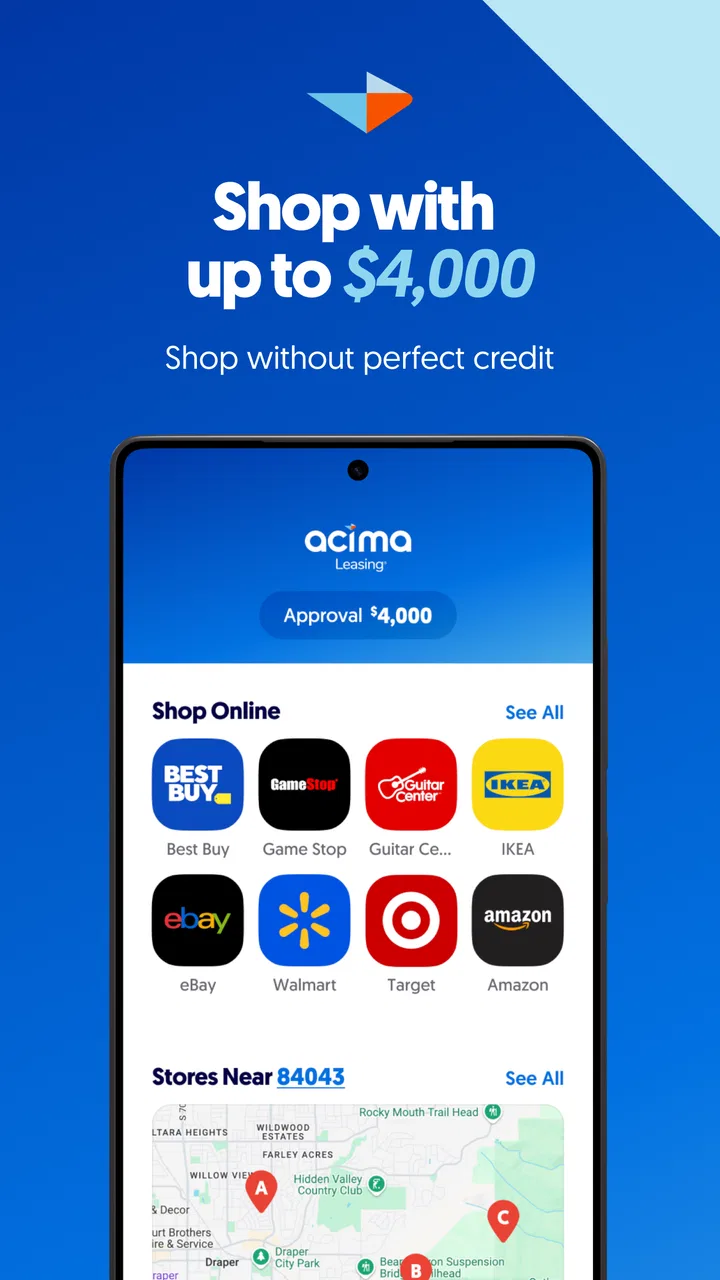
Acima Leasing
- 3.8
- Rating
- 1.00M
- Installs
- Free
- Price

 Analysis by App-foxy
If you are looking at Acima Leasing because a traditional loan or credit card is not a comfortable option, the first thing I would say is this: treat it as a financing tool that needs careful reading, not as free money. I found the app most useful when I approached it as a way to review a lease-to-own option, compare the total commitment with my budget, and keep the process organized from my phone.
Acima, the developer behind this finance app, presents it as a no-credit alternative to traditional financing. That description explains its purpose, but it does not remove the need to understand the agreement before accepting anything. The app is free to install, carries an Everyone age rating, and is available for devices running Android 7.0 or later. Its current version is 5.3, so it is aimed at a broad range of Android phones rather than only recent hardware.
My overall impression is practical but cautious. The app can be helpful for someone who needs to explore an Acima lease and wants a mobile path instead of handling every step elsewhere. It is less suitable for anyone who only wants a conventional purchase, a simple budgeting app, or the lowest possible total cost without comparing alternatives. The important distinction is that convenience and approval access are not the same thing as affordability.
You May Also Like

 Blood Strike: 2.5 Anniversary
Blood Strike’s Loadouts Turn Every Drop Into a Tactical Gamble
A close look at Blood Strike’s custom loadouts: how fast access to signature weapons reshapes its battle royale rhythm, rewards preparation, and narrows the gap between fights.

 Pandora - Music & Podcasts
Pandora’s Music Is Easy to Start, but Harder to Recover
Pandora’s strength is its low-effort path from a seed to a station. Its weak spot is how much confidence it asks you to place in connection, setup, and quiet recovery.

 8 Ball Pool
 Is Built on Rivalries, Rematches, and Routine
A close look at the rivalries, rematches, shared routines, and unanswered safety questions that turn a quick pool match into a persistent mobile community.

 Samsung Music
’s Quiet Strength Is Playing What You Already Own
Its reach comes less from spectacle than from dependable access to a personal library. That simplicity is both the app’s strongest retention engine and its ceiling.

 AccuWeather: Weather Radar
AccuWeather Review: A Quick, Clear Forecast for Everyday Decisions
For everyday plans, the best forecast is the one you can understand quickly. AccuWeather makes rain timing, radar, and local conditions easy to act on, with a few trade-offs.

 Hill Climb Racing
Why Hill Climb Racing Still Turns Crashes Into One More Run
A tiny car, a bumpy hill and one more upgrade: Hill Climb Racing keeps resurfacing because its simple chaos makes every near-miss feel personal.
More From Our News Desk



What to expect before you begin
Acima Leasing belongs in the personal finance category, but I would not use it like a banking app or a general money manager. Its role is narrower: it supports the process around Acima’s leasing option. That means the useful questions are not “Can this replace my bank?” or “Will this improve my credit?” Instead, I would ask whether the lease structure fits the purchase I have in mind and whether I can comfortably meet the required payments.
The app has attracted more than a million installs, with an average rating of 3.8 from around 4,600 ratings. I read that as a sign of a mixed but meaningful user experience: enough people find it useful, while the score also suggests that expectations and individual circumstances matter. A finance app can feel excellent when it makes an application or account task easier, yet frustrating when a user expects it to work like a standard credit card.
Before opening it, I would decide what I am trying to accomplish. If I need a specific household item or essential purchase, I would write down its cash price, the amount I can pay immediately, and the maximum recurring payment that would still leave room for rent, food, transport, and emergencies. This small preparation step is more valuable than rushing directly into an application because it gives me a reference point when reviewing the lease terms.
I would also keep the word “alternative” in perspective. A no-credit option may be useful when a conventional lender is not available, but it is not automatically cheaper or easier over the full term. The right comparison is the complete amount I may pay under the agreement, not only the first payment or the amount that appears manageable today.
Who is likely to benefit
I see the strongest fit for a person who has a clear purchase in mind, wants to investigate Acima’s option, and is comfortable slowing down to read each condition. It may also suit someone who prefers completing finance-related steps on a phone rather than switching between paper forms, phone calls, and a retailer’s website.
A realistic example would be replacing a necessary appliance after an unexpected breakdown. I would use the app to begin the process, review the available information, and then compare the resulting commitment with the appliance’s ordinary cash price and with other payment choices. If the lease is the only workable route, the app may provide a convenient starting point. If I can wait and save, buy used, or use a lower-cost conventional option, those choices deserve equal attention.
I would skip it if I am looking for a rewards card, a credit-building service, investment tools, bill tracking, or a full personal finance dashboard. Those are different jobs. I would also avoid starting the process while tired, rushed, or under pressure from a salesperson. The phone makes the process accessible, but that same convenience can make it too easy to accept something without thinking through the total obligation.
Setting up the app without rushing
After installing the free app, I would begin by checking that I am using the official Acima Leasing application and that my phone meets the Android requirement. The initial setup should be treated like any financial application: use information that matches my records, keep access details private, and avoid completing sensitive steps on a device or network I do not trust.
I would keep basic personal and financial information nearby, but I would not guess at an answer simply to move forward. In finance, a small mismatch can create delays or require another review later. Entering accurate information once is usually less frustrating than submitting an incomplete or hurried application and then trying to correct it.
One practical habit is to separate setup from decision-making. First, I would create access and understand where the app places account or application details. Then I would stop and review the actual offer or agreement independently. This prevents the momentum of registration from turning into an accidental purchase decision.
I would also make a note of the exact item I am considering and its seller or purchase context. That sounds basic, but it helps prevent a common mistake: evaluating a lease in isolation while forgetting that the item’s price, delivery, taxes, accessories, or related charges may affect the real budget. The app can support the financing process, but it cannot decide whether the underlying purchase is sensible for me.
Privacy and phone habits that matter
Because this is a finance app, I would use a screen lock and avoid sharing screenshots that contain account details. I would not save sensitive information in a public notes app or send it casually through messages. These are not special Acima features; they are sensible habits whenever a phone is used for a financial application.
I would keep notifications useful rather than distracting. If the app offers account-related alerts during use, I would pay attention to them, but I would still open the app or official account area directly instead of trusting a message that asks me to disclose information. The safest workflow is to treat notifications as reminders and verify important details inside the account.
Another useful step is updating the app when a newer version is available through the normal app store. The installed version is 5.3, and keeping software current can reduce avoidable compatibility problems. I would not install modified copies or use unofficial download sources for an application connected to financial information.
Reaching the first meaningful success
For a first-time user, success is not merely finishing installation. I would define it as reaching a clear understanding of whether the Acima option is appropriate for one specific purchase. That means using the app to move from a vague idea—“I need financing”—to a documented decision: what I want, what I may owe, when payments may be due, and whether the arrangement fits my real budget.
My suggested path would be straightforward. I would open the app, complete only the necessary account or application steps, and keep the purchase details in front of me. When the app presents information about the lease, I would read the payment schedule and the total commitment rather than focusing only on the first amount shown. I would write the important figures down in my own budget before agreeing to anything.
This is where the app’s mobile format becomes genuinely useful. I can compare the offer with my notes while I am still deciding, rather than relying on memory. I can also pause if the terms are unclear. A pause is not a failed application; it is a sensible response when a financial commitment has not yet become understandable.
I would then compare three paths: paying cash if possible, using a conventional financing option if one is available and affordable, and using the Acima lease. The comparison should include timing and flexibility, not just the advertised starting payment. A lower immediate payment can still create a larger overall obligation, while a cash purchase may require waiting but avoid recurring commitments.
The best first result is a confident decision, not a fast approval. If I understand the arrangement and it fits my budget, I have achieved something useful. If I discover that the total cost or payment schedule is uncomfortable, the app has still helped me avoid a poor decision by making that concern visible early.
A practical appliance scenario
Imagine my refrigerator stops working and I need a replacement quickly. I would first check whether repair, a used model, help from savings, or a conventional payment method is realistic. If I then choose to explore Acima, I would use the app while keeping the appliance’s cash price and my monthly household budget open beside it.
I would not stop at the question of whether the first payment fits. I would ask whether the recurring amount remains manageable during a month with higher utility bills or an unexpected expense. I would also confirm what happens if I want to finish early, return the item, or change the arrangement, using the agreement’s own terms rather than assumptions from another financing product.
That workflow turns the app into a decision aid instead of a button that simply moves me toward a purchase. It also protects me from comparing unlike figures, such as a lease payment against only the item’s sticker price while ignoring the length and structure of the agreement.
Where first-time users can become confused
The biggest source of confusion is the difference between leasing and ordinary borrowing. A user may see a payment amount and assume the product works like a standard installment loan or credit card. I would not make that assumption. The legal and financial consequences can differ, so I would read the agreement carefully and look for explanations of ownership, payment timing, early completion, and what happens if payments are missed or the item is returned.
Another confusing point is the difference between being able to apply and being able to afford the arrangement. The app can provide access to the process, but approval or availability does not mean the payment is right for my household. I would treat any result as an offer to evaluate, not as a recommendation that I should proceed.
Users may also wonder whether using Acima is the same as building traditional credit. I would not assume that it is. If improving a conventional credit profile is my main goal, I would investigate products specifically designed and documented for that purpose. Acima may solve a short-term purchasing problem, but that does not automatically make it a credit-building strategy.
It is also easy to confuse the app with the retailer where the item is purchased. The app supports the Acima side of the process; it is not necessarily a replacement for checking the seller’s return policy, delivery terms, warranty, installation cost, or product quality. I would keep those responsibilities separate and confirm them with the retailer before committing.
When the app feels less convenient
Although the app is free, the financial arrangement it helps me explore is not free simply because installation costs nothing. That distinction should stay visible throughout the process. I would never use the app’s price label as a shortcut for judging the cost of the underlying lease.
The 3.8 average rating also makes me cautious about expecting a flawless experience on every phone or in every situation. If a page does not load, an application step becomes unclear, or account information looks inconsistent, I would avoid repeated submissions. I would record what happened, check the app’s available support route, and keep any confirmation details. Sending duplicate applications can create unnecessary confusion.
Another limitation is that mobile convenience can compress complicated information onto a small screen. I would read important terms in a quiet place, enlarge the text if needed, and use a larger screen or official documentation when the phone view feels crowded. If I cannot explain the payment structure in my own words, I am not ready to accept it.
Comparing Acima with the usual alternatives
Compared with a credit card, Acima may appeal to someone who does not want or cannot obtain traditional revolving credit. A credit card can offer broader purchasing flexibility and, depending on the account, different repayment choices, but it can also carry interest and encourage balances that linger. Acima is more purchase-focused, yet its lease structure must be evaluated on its own terms rather than assumed to be equivalent to card financing.
Compared with a conventional personal loan, the app may provide a more direct path for a particular purchase. A bank or credit union loan may offer clearer ownership from the start and a familiar repayment structure, but eligibility can be stricter and the application may take a different route. I would compare the complete cost, not decide based solely on which application feels easier.
Compared with saving and paying cash, leasing is faster but usually creates an ongoing obligation. Cash avoids a payment schedule, although waiting may be difficult when an essential item fails. In that situation, I would consider whether a cheaper temporary replacement or repair could reduce the amount I need to finance.
Compared with retailer installment plans or buy-now-pay-later services, Acima should not be treated as interchangeable. Each product can have different eligibility rules, payment timing, ownership conditions, and consequences for missed payments. I would read the exact agreement for the option I am offered and compare the total amount in plain currency, not just the monthly headline.
This comparison leads to a simple judgment: Acima is most valuable when access is the main obstacle and I have a disciplined plan for repayment. It is less compelling when I already qualify for a lower-cost option or when I am using financing to buy something nonessential that I could comfortably postpone.
What I would do after the first decision
If I decided to proceed, I would keep a personal record of the agreement, payment dates, and the amount I expect to pay over time. I would not rely entirely on memory or on a notification. A small calendar reminder and a monthly budget line can make the obligation visible before the due date, especially when several household bills arrive together.
I would review the account periodically, looking for the information that affects my next action. If I want to complete the arrangement early, return an item, or ask about a payment problem, I would contact the appropriate official support channel promptly and ask for the answer in terms I can understand. Waiting until a payment is already late usually gives me fewer comfortable choices.
I would also reassess the purchase itself after the immediate emergency has passed. If the item was essential, the lease may have served a practical purpose. If I used it for an impulse purchase, I would treat that as a warning before taking on another obligation. The app can make access easier, so my personal rules need to provide the restraint that the phone cannot provide for me.
For readers wondering whether the app is appropriate for every household, my answer is no. Someone with stable savings or a clearly cheaper conventional option should compare those first. Someone who cannot explain how the lease works should wait. Someone facing an urgent essential purchase and limited traditional financing choices may find Acima worth investigating, provided the full commitment is affordable.
Acima Leasing is a free finance app from Acima, rated for Everyone and available on Android 7.0 and above. It has passed the one-million-install mark and has around 2,200 written reviews, which places it among established tools rather than an unknown experiment. My recommendation is measured: use it to understand and manage the Acima leasing process, but make the financial decision outside the excitement of a quick mobile application.
In my experience, the app’s real strength is giving a first-time user a convenient place to begin a focused financing conversation. Its real weakness is that convenience can disguise complexity if I read only the first payment and skip the agreement. If I compare alternatives, record the full obligation, and proceed only when the purchase is genuinely necessary and manageable, it can be a useful option. If I am chasing the fastest approval or hoping financing will make an unaffordable purchase affordable, I would choose a different path.
FAQs for Acima Leasing
01What is Acima Leasing and how does it work?
Acima Leasing is a lease-to-own service that allows eligible shoppers to obtain products from participating retailers and pay for them over time instead of paying the full price upfront. After applying through the app or a retailer, you can review available terms, make scheduled payments, and potentially acquire ownership according to the agreement. Approval, payment amounts, and available products vary by applicant and retailer.
02Does Acima Leasing require a traditional credit score?
Acima Leasing generally promotes an application process that may consider more than a traditional credit score, which can make it appealing to shoppers who have limited or less-than-perfect credit histories. However, approval is not guaranteed, and the company may review information such as identity, banking details, income, and payment history. Read the complete agreement to understand eligibility and costs.
03How much does Acima Leasing cost?
The total cost depends on the merchandise price, payment schedule, lease duration, and the terms offered during checkout. Lease-to-own agreements can cost substantially more than the original cash price if payments continue for the full scheduled term. Some agreements may offer an early-purchase option that reduces the overall amount. Always compare the cash price with the total lease payments before accepting.
04What can I buy with Acima Leasing?
Available products depend on the participating retailer and may include furniture, appliances, electronics, mattresses, tires, jewelry, and other household or personal items. The app itself may help you manage your account or locate participating merchants, but it does not necessarily provide the same inventory everywhere. Before applying, confirm that your preferred retailer accepts Acima and that the product qualifies.
05What should I know about payments, returns, and cancellation?
Payments are usually scheduled according to the lease agreement and may be collected through an authorized payment method. Missing payments can lead to fees, account problems, or repossession-related consequences depending on the contract and local rules. Return and cancellation policies may involve both Acima Leasing and the retailer, so review them before signing. Keep copies of receipts, payment confirmations, and the full agreement.
Pros
- Flexible lease-to-own options for shoppers with limited credit history.
- Quick application process with relatively simple eligibility requirements.
- Can help spread the cost of essential purchases over manageable payments.
- Available at many participating retailers across different product categories.
- Online account tools make it easy to view payments and manage lease details.
Cons
- Lease-to-own costs can greatly exceed the item's original cash price.
- Payment schedules and fees may be difficult to understand at first glance.
- Missed payments can lead to extra charges and potential loss of the item.
- Not every retailer or product is eligible for Acima financing.
- Approval does not guarantee affordable payments for every budget.

Acima Leasing
Gallery